Securing reliable HVAC Spokane property owners can depend on is critical for maintaining indoor safety during severe Inland Northwest weather shifts. When searching for skilled HVAC near me, local homeowners require rapid diagnostic response times, transparent component assessments, and resilient climate systems.
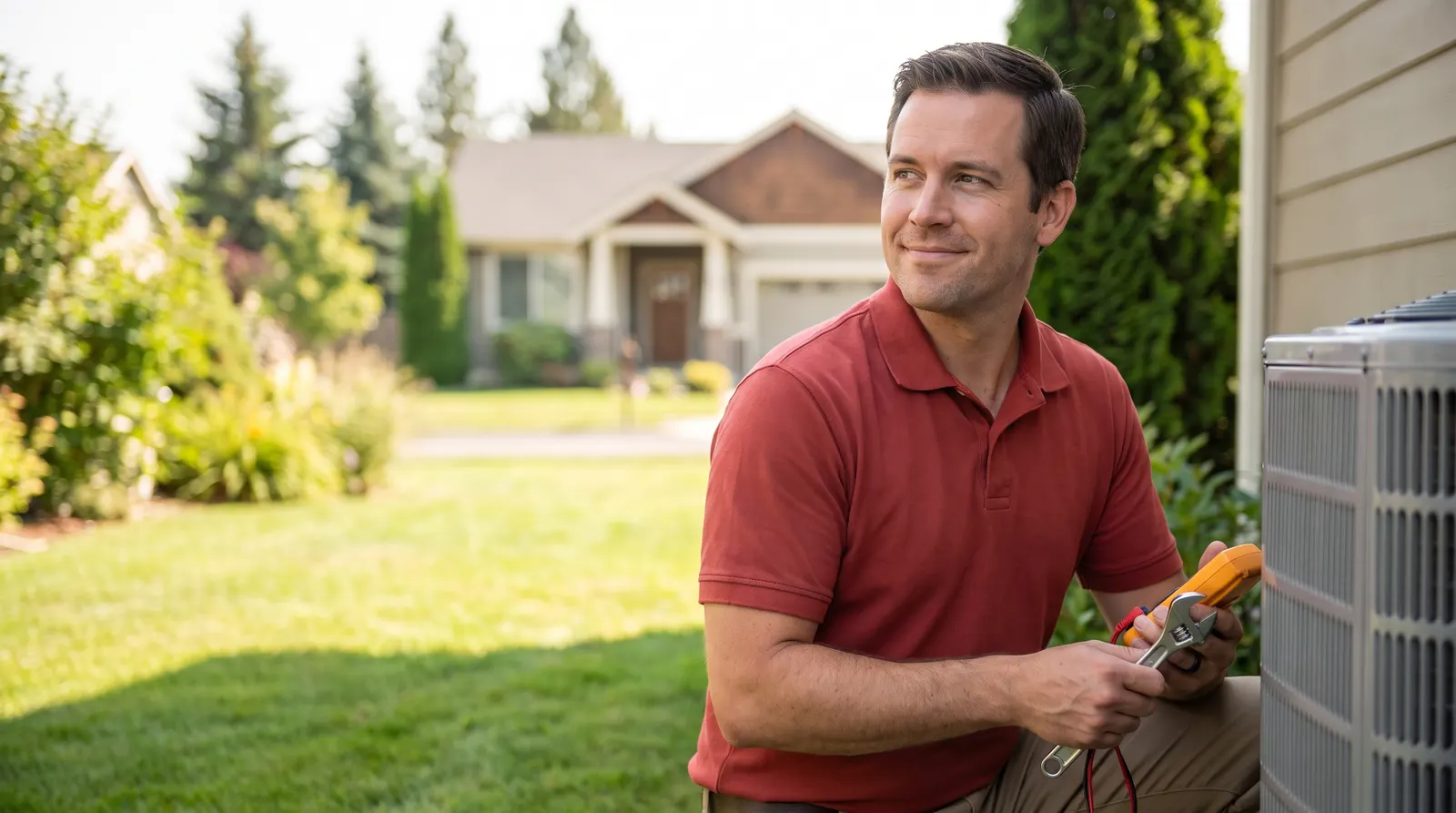
HVAC in Spokane is a specialized mechanical trade that encompasses the engineering, installation, diagnostic testing, precision repair, and preventative maintenance of residential and commercial climate control systems across Spokane County.
Every service reflects the same meticulous attention to detail — whether it's a single job or a larger hvac project across spokane.
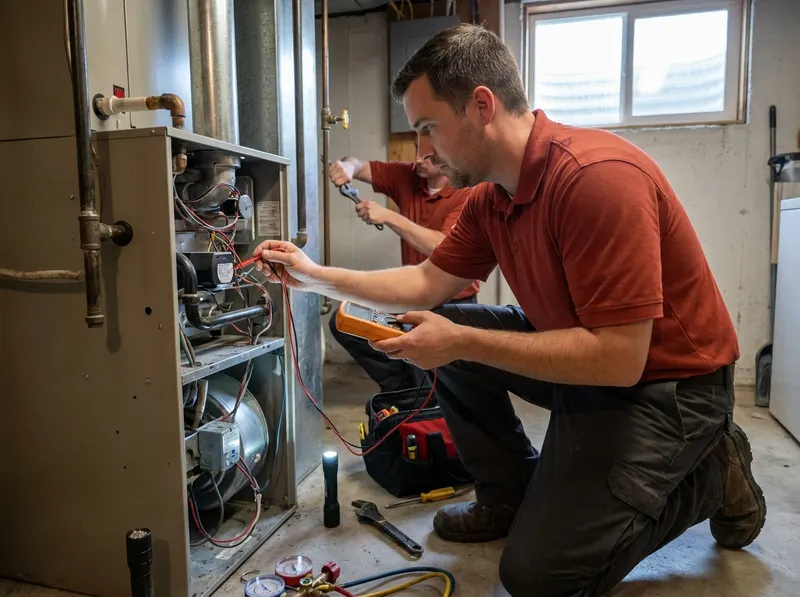
Emergency furnace repair restores safe, functional heat when heating systems fail during sub-zero Inland Northwest winter cold snaps. Diagnostic protocols evaluate electronic ignition sequences, silicon nitride hot surface ignitors, flame rectification sensors, single-stage and two-stage gas control valves, and 24-volt transformer circuits. Technicians verify safety limit switches, roll-out sensors, and differential pressure switches to ensure mechanical combustion exhaust draft inducer blowers evacuate toxic flue gases safely through chimney or PVC venting. For electric furnaces, technicians inspect open-wire nichrome heating elements, step-sequencers, thermal cutoffs, and multi-speed or ECM blower motors. Combustion analysis tests natural gas manifold pressure, checks fuel-to-air mixture ratios, and screens for hazardous carbon monoxide leaks caused by hairline stress fractures in primary or secondary aluminized or stainless-steel heat exchangers. Every repair focuses on replacing isolated defective parts with OEM components to restore optimal factory performance before any total system replacement is discussed.
View details →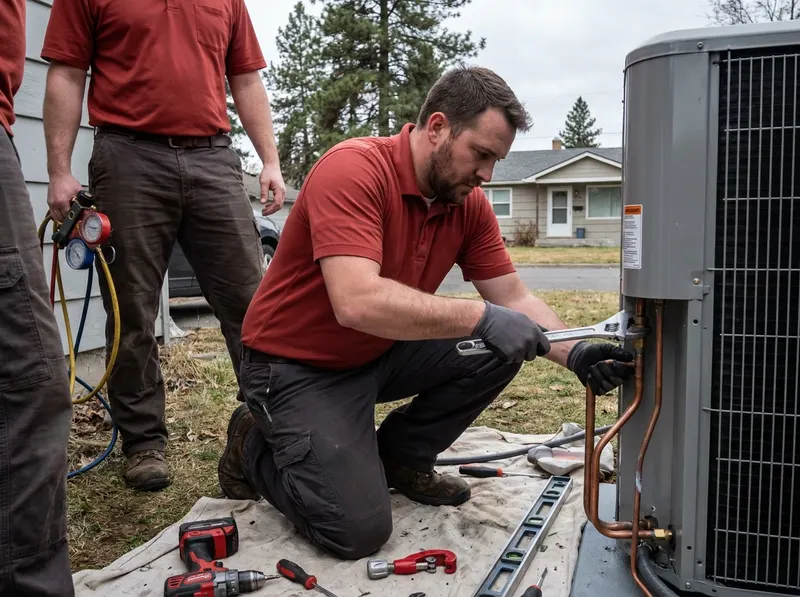
Cold-climate heat pump installation provides whole-home heating and air conditioning designed to operate efficiently in eastern Washington's sub-zero climate. Modern variable-capacity inverter-driven rotary compressors dynamically modulate refrigerant flow to deliver continuous heating performance at outdoor ambient temperatures dropping down to -15°F without over-relying on high-amperage auxiliary resistance heat strips. Installations begin with ACCA Manual J residential load calculations to accurately determine structural heat loss and heat gain across Spokane floor plans, preventing oversized equipment short-cycling or undersized winter heating deficits. Systems incorporate matched multi-position air handlers, electronic expansion valves (EEVs), intelligent defrost control boards that minimize cold blow cycles, and environmentally compliant next-generation refrigerants. Technicians install elevated mounting brackets and snow-stand legs that hold the exterior condenser 12 to 18 inches above ground level, keeping the coil clear of accumulated snow and winter ice buildup. Dual-fuel configurations integrate the heat pump directly with a high-efficiency gas furnace to toggle seamlessly between electrical and natural gas heating based on local Avista utility pricing.
View details →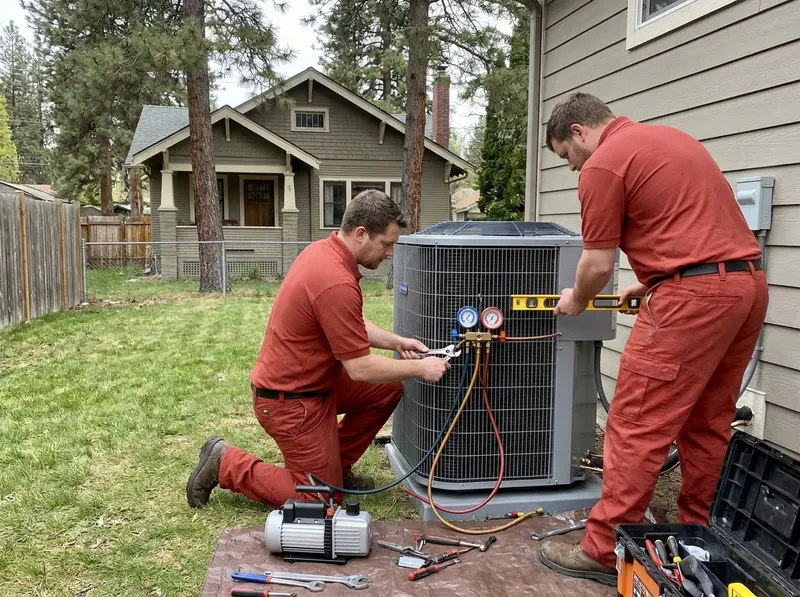
Central air conditioning replacement upgrades aging, noisy, or failing cooling systems with high-efficiency split-system condensing units and matched indoor cased evaporator coils. Modern systems deliver SEER2 ratings ranging from 14.3 to over 20, substantially reducing peak summer electrical consumption during sustained 95°F to 105°F heat waves in the Spokane basin. The replacement process includes recovering legacy R-22 or R-410A refrigerants in strict accordance with EPA Section 608 recovery standards, flushing and pressure-testing existing copper linesets with dry nitrogen to 350+ PSI, and evacuating the circuit to a deep vacuum below 500 microns to eliminate non-condensables and moisture. Technicians replace clogged thermal expansion valves, install liquid-line bi-flow filter driers, level composite outdoor equipment pads, and wire high-voltage disconnect boxes with integrated surge suppression. Balanced airflow testing ensures the newly installed system delivers proper cubic feet per minute (CFM) across all finished living zones, eliminating hot upper floors and excessive indoor humidity.
View details →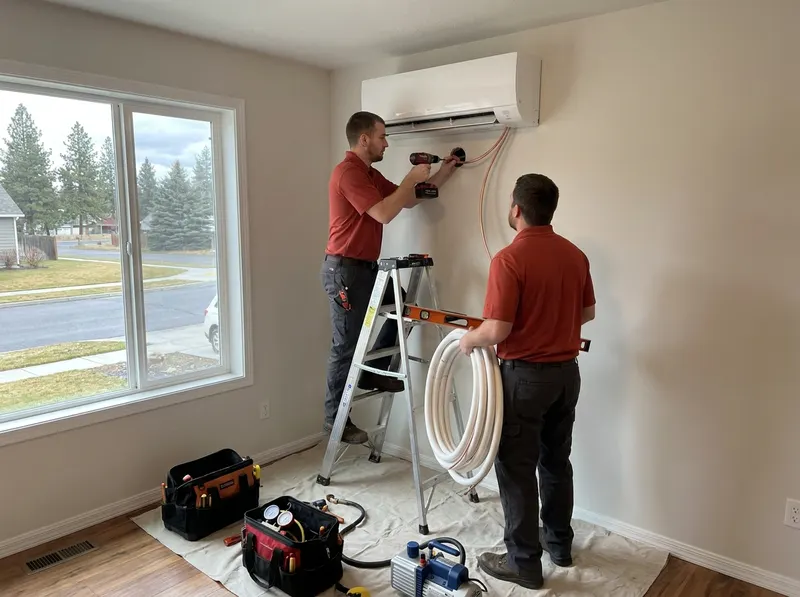
Ductless mini-split installation delivers targeted heating and cooling to specific zones without requiring invasive sheet metal duct installations. These systems are well suited for historic brick and stone homes in the South Hill, finished basement suites in Five Mile Prairie, bonus rooms over unconditioned garages, and commercial office suites. Exterior multi-port inverter condensers link through compact, insulated refrigerant line pairs to individually controlled indoor units, including high-wall units, low-wall console units, and recessed ceiling cassettes. Each indoor zone operates independently with its own wireless thermostat or wall-mounted sensor, allowing occupants to heat or cool occupied rooms while scaling back energy usage in unused areas. High-performance inverter heat pumps deliver heating season performance factors (HSPF2) up to 10.5 and cooling efficiencies up to 28 SEER2. Technicians install gravity drain lines or low-decibel condensate pumps, integrate outdoor line-hide architectural covers that match exterior siding, and calibrate localized temperature offsets to ensure steady comfort across multi-level floor plans.
View details →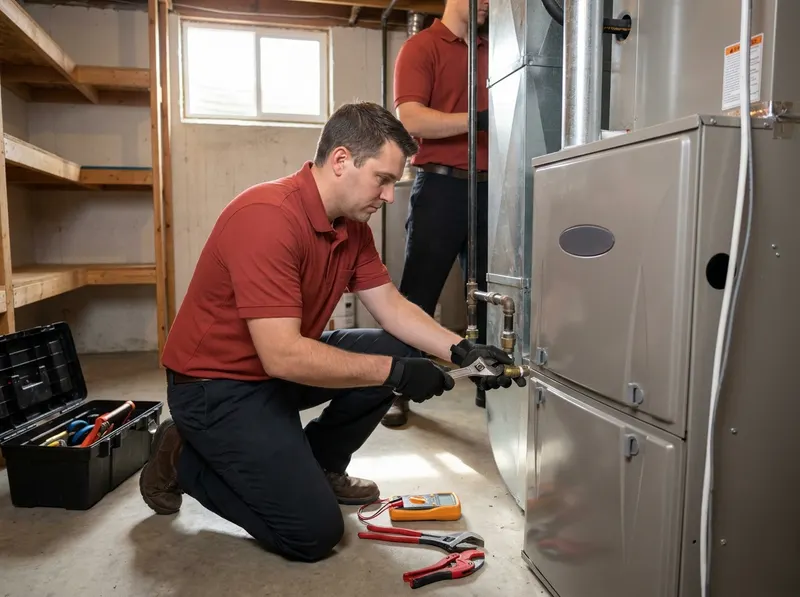
Gas furnace replacement replaces outdated, low-efficiency natural gas or propane heating units with modern 96% to 98% AFUE condensing furnaces. Condensing systems utilize dual heat exchangers—a primary stainless-steel exchanger and a secondary condensing exchanger that captures latent heat from flue gas vapor before venting it through schedule 40 PVC or polypropylene pipe. Variable-speed ECM blower motors gradually ramp up airflow to reduce electrical draw, minimize draft noise, and distribute heat evenly across multi-story Spokane residences. The installation scope includes custom sheet metal supply and return transition fabrication, gas shutoff valve updates, flexible stainless gas connector installation, sediment trap plumbing, and safety condensate drain line routing with internal overflow switches. Technicians execute complete commissioning procedures, checking static pressure across the cooling coil and filter rack, verifying temperature rise against manufacturer nameplate specifications, and adjusting natural gas manifold pressure for peak combustion efficiency.
View details →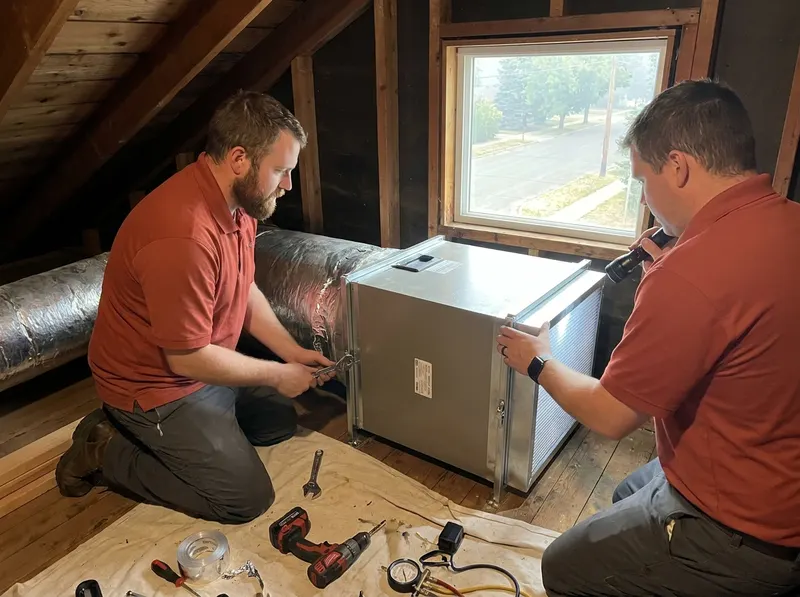
Whole-home indoor air quality retrofits protect residential interiors from the severe particulate pollution generated during regional Pacific Northwest wildfire seasons. Technicians install high-capacity deep-pleat 4-inch to 5-inch media air cleaner cabinets directly into the central return air drop, accepting MERV 13 to MERV 16 filtration cartridges that trap over 90% of sub-micron airborne particulates, including PM2.5 wildfire smoke, pollen, fungal spores, and household dust. Systems are engineered with wide surface-area filter media to maintain low static pressure drop, preventing furnace blower motor overheating and preserving necessary system CFM airflow rates. Advanced retrofits integrate whole-home activated carbon matrix filters to adsorb volatile organic compounds (VOCs) and smoke odors, alongside bypass or fan-powered flow-through humidifiers to combat eastern Washington's arid winter indoor conditions. Technicians test static duct pressure, evaluate fresh air intake economizers, and configure smart thermostat fan circulation modes to deliver continuous filtration during local air quality alerts.
View details →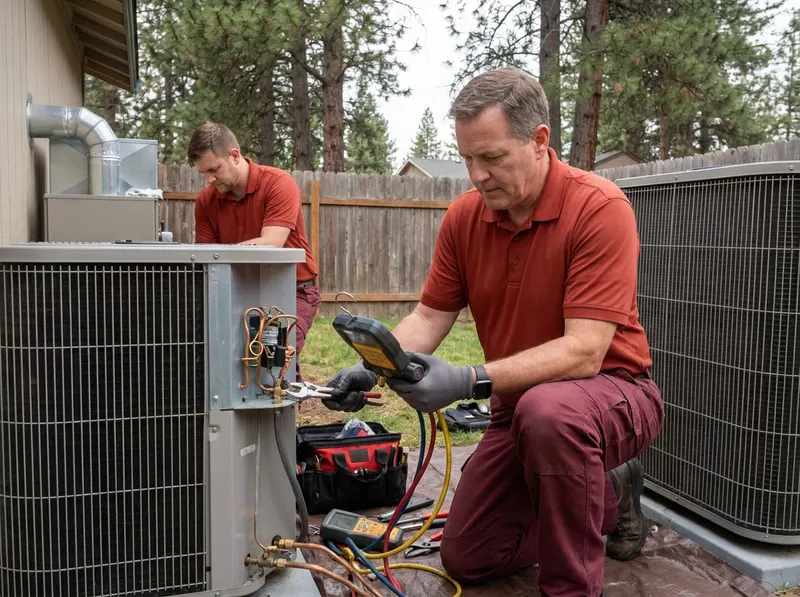
Seasonal preventative maintenance maximizes operational reliability, extends equipment service life, and reduces utility costs by identifying minor component wear before it leads to system failure. Comprehensive spring cooling tune-ups include chemically cleaning exterior condenser coils to eliminate road film, cottonwood fuzz, and debris; verifying high-voltage contactor points for electrical pitting; testing dual-run capacitors with digital microfarad meters; clearing algae and mineral sediment from condensate drain lines and trap assemblies; and verifying proper superheat and subcooling refrigerant levels. Comprehensive autumn heating tune-ups include brushing and vacuuming burner assemblies, microamp flame sensor testing, gas pressure verification, draft inducer amperage draw measurement, chimney and venting flue inspections, high-limit switch safety testing, and thermal imaging checks of the heat exchanger assembly. Technicians provide detailed digital service reports documenting all electrical readings, static pressures, temperature differentials, and component conditions.
View details →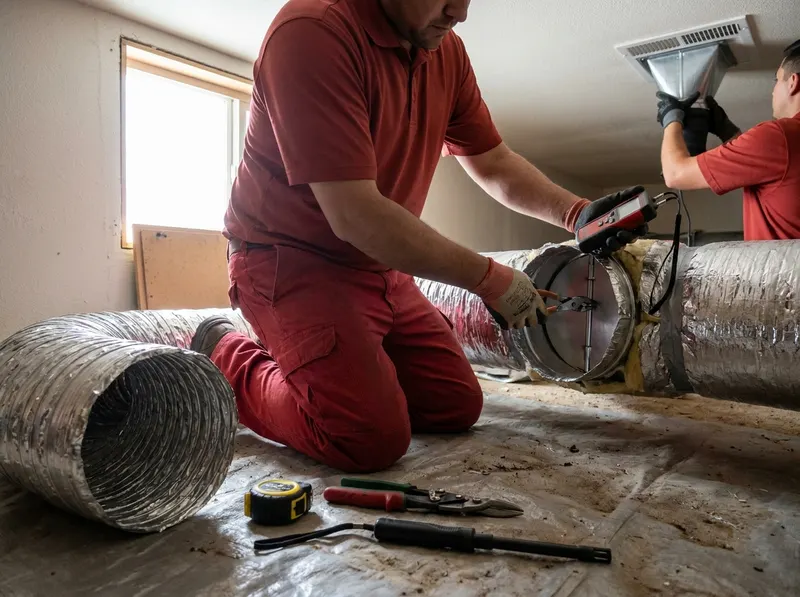
Ductwork repair, modification, and airflow balancing restores proper static pressure and consistent temperature distribution throughout homes with compromised duct systems. Leaking, crushed, or undersized sheet metal and flexible duct runs cause substantial energy loss, noisy airflow, cold back bedrooms, and frozen evaporator coils. Technicians inspect duct runs in attics, crawlspaces, and basement joist cavities, identifying disconnected joints, torn vapor barriers, and degraded duct tape. Technicians seal all supply and return seams using UL 181-rated water-based mastic sealant and fiberglass mesh tape to eliminate conditioned air leaks. Upgrades include enlarging undersized return air grilles, installing manual balance dampers on individual supply branches, rerouting crushed flexible ducts, and insulating bare sheet metal in unconditioned spaces to R-8 standards to eliminate thermal loss and prevent winter condensation. Magnehelic differential pressure gauges and hot-wire anemometers verify static pressure and CFM airflow across each register.
View details →HVAC in Spokane is a specialized mechanical trade that encompasses the engineering, installation, diagnostic testing, precision repair, and preventative maintenance of residential and commercial climate control systems across Spokane County.
You get a firm, itemized quote for your hvac before any work begins — no surprises, no pressure.
Careful prep, tidy work, and a full cleanup when we are done. We treat your home and belongings like our own.
The same trusted, background-checked team from the first call to the final check.
Selecting the right indoor climate equipment requires balancing fuel availability, structural architectural constraints, and long-term utility operating expenses. If your home has existing sheet metal ductwork and an established natural gas connection, choose a high-efficiency 96% to 98% AFUE modulating gas furnace paired with a high-SEER2 central air conditioner to ensure rapid thermal recovery during prolonged sub-zero Canadian arctic fronts; the trade-off is ongoing dependence on dual utility inputs and conventional distribution duct heat loss in unconditioned attic or crawlspace zones. If your property is a historic multi-story craftsman in Brown's Addition or a mid-century daylight rancher lacking functional supply and return ductwork, choose a multi-zone ductless mini-split heat pump system powered by variable-refrigerant inverter technology; the trade-off is higher upfront capital expenditure per installed indoor head balanced against zero duct transmission losses, room-by-room zoning flexibility, and simultaneous cooling and heating performance. If your primary goal is maximizing electrical efficiency while reducing reliance on fossil fuels, choose an advanced cold-climate air-source heat pump equipped with an auxiliary electric heat strip package or a hybrid dual-fuel cased coil integrated above a condensing gas furnace; the trade-off is managing higher winter electrical demand during extreme cold snaps when temperatures drop below -10°F against substantial annual carbon reductions and summer cooling efficiency. If your current furnace or condenser is over 15 years old and faces a major component failure—such as a cracked secondary heat exchanger, a grounded hermetic compressor, or a corroded evaporator coil—that exceeds $1,200 to $1,800 in parts and labor, choosing complete mechanical replacement provides modern R-454B or R-32 refrigerant compliance, 10-year factory parts warranties, and improved seasonal efficiency; repairing an aged unit preserves immediate cash flow but risks compounding secondary breakdowns during severe weather stress.
Every project gets a firm, written price after a free on-site visit. Ranges below for orientation.
Tell us about your hvac job and we'll send a clear, written quote — usually the same day. Or just call and talk to a real spokane pro.
Spokane presents a demanding operational environment for heating and cooling equipment due to extreme seasonal temperature variations and unique geographic factors. Winter temperatures regularly drop into the single digits, accompanied by sub-zero Canadian arctic cold fronts that place sustained mechanical loads on residential gas furnaces and heat pumps. Conversely, eastern Washington summers bring prolonged periods of dry heat with afternoon temperatures exceeding 95°F to 100°F across the Spokane River basin, requiring central cooling systems to operate under heavy thermal stress. The city's diverse housing stock reflects these climate demands: historic turn-of-the-century brick and timber homes in Brown's Addition, South Hill, and the Perry District often feature thick plaster walls and lack distribution ductwork, making multi-zone inverter mini-split installations the preferred heating and cooling solution. In contrast, modern suburban subdivisions across Five Mile Prairie and Indian Trail rely on advanced multi-stage gas condensing furnaces and high-SEER2 central air systems engineered to optimize utility consumption under Avista electric and natural gas rate structures. Furthermore, the geography of the Inland Northwest subjects the area to late-summer wildfire smoke drifting from regional fires in the Cascades, northern Idaho, and British Columbia. When smoke settles into the valley and creates hazardous air quality conditions near landmarks like Riverfront Park, Manito Park, and Mount Spokane State Park, HVAC systems must maintain positive indoor filtration through deep-bed MERV 13 or higher media air cleaners without choking system airflow or overheating blower assemblies.
 Evergreen air HVAC